
October 14, 2026
Season 1 Episode 2
Thirty Years in HR with Michael Goble: What Most Companies Still Get Wrong
Most companies treat HR as the policy police. Michael Goble, founder of The HR Consultant, spent thirty years proving that's the fastest way to lose both culture and margin. He and Tim Carroll get into what it actually takes to earn a seat at the table, and why connection still requires a room.
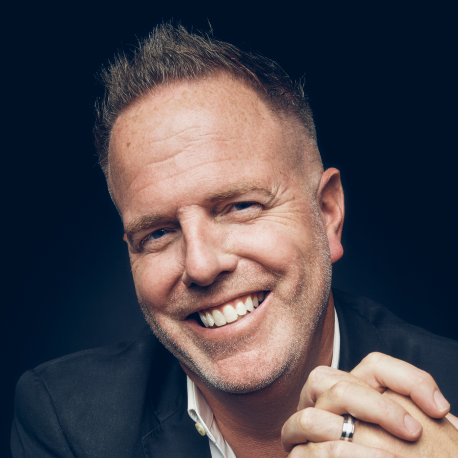
Tim Carroll
CEO Lyric Workplace
Best Selling Author

Michael Goble
Founder
The HR Consultant


Episode Sponsors


Synopsis
There is a gulf between HR and the rest of the organization, and Michael Goble says it is HR's job to close it. In this conversation, he and Tim Carroll take apart the idea that an HR title earns anyone a place in the strategic conversation. It doesn't. Understanding the P&L, the margin pressure, and the daily reality of operations does.
The discussion moves from the human body as a diagnostic model for organizational harmony, to the measurable difference between being involved in a decision and being informed about one after it's made. Michael makes the case that leaders who bring HR into restructures early get better outcomes, faster. Tim pushes on where the HR function ends and leadership begins, and gets an answer he didn't expect.
Michael Goble is the founder and president of The HR Consultant, a Florida-based HR and labor relations consulting firm serving clients nationwide, with more than thirty years of enterprise HR and labor relations experience.
The episode closes on the one outdated policy he would eliminate tomorrow, and why most companies are carrying a version of it right now.
Full Transcript
Michael Goble (00:00): There's been too long of a chasm, and I'm gonna call it a massive gulf between HR and everybody else in organizations. And we should be building bridges. it's at the fault of the HR people. Nobody's stopping an HR person. There's not an operator that I've ever met that would stop an HR person that walks up to them and says, Teach me what you do. Tell me how you do your job so well. Show me what it's like being a district director, a VP, of finance.
Tim Carroll (00:29): Welcome to Harmony at Work, the podcast where culture, creativity, and the workplace come together. Today, I'm joined by Michael Goble. Michael is the founder and president of The HR Consultant, a Florida-based HR and labor relations consulting firm serving clients across the country. He brings over 30 years of enterprise HR and labor relations experience to the table. This is a really great and very timely conversation. Let's get after it. Hey Michael, thank you so much for joining us today. I I really, really appreciate it. Very excited I know that HR culture, it's it's a big thing around the country. that they're tied together. Quite frankly, I always love when I'm talking to HR professionals around the physical space with what Lyric Workplace does. And I know that when I'm talking to an HR professional as it relates to the interior space, I know that company gets it because they understand that that can really drive culture. So welcome. Thank you so much for being with us.
Michael Goble (01:37): No, thank you for having me, Tim. I you know, I always look forward to these conversations. I think a lot of times a lot of HR people get a lot of technical questions and not a lot of strategy or even environmental questions, which I think we're gonna cover a little bit of both, and I'm pretty excited about the conversation. So first of all, thanks for having me.
Tim Carroll (01:54): Course. So let's dive in. First question typical that we ask, and that is how do you define harmony in a workplace and what are the most common things that quietly disrupt it without leaders even realizing?
Michael Goble (02:09): Yeah, so you know, if you think about this a little bit about my background, is you know, I've been thirty years in HR or HR-related stuff and worked in several different environments. Here's how I like to think about harmony and think about the human body. You know, when you're young and you're starting out, things flow pretty easily, pretty simply. There's not a lot going on. And as a business grows and your body grows and you get a little older, a little bit more Mature, you've got to really work at harmony. I've at least recently started taking some golf lessons and realized my golf swing was not in harmony. it was a minor tweak here or a minor tweak there. And I will tell you that much like a business and the HR practices and culture, think about the body, you get an acre of pain, you've got two options. You ignore it because it's typical growing pains. You've got some people that maybe don't like the Office setup, or they're not enjoying this, but it's part of growing pains, or your pinky is swollen and you need to ice it, and you've got to address it. So go back to the office setting. You've got somebody that's having a real issue, having some performance problems, you have to address it. So back to your harmony question. The way that you stay in harmony is by not ignoring the serious signs that may need help. Beyond just they're gonna get over it and work through And so the the human body is a really great analogy for me because we all can relate to aches and pains that are normal aches and pains. then we've also probably had some more serious complications that needed to be addressed in leadership. Going back to the second part of the question, what quietly disrupts? What quietly disrupts is the lack of attention, ignoring. And walking by something that is going to be allowed and then slowly grows and becomes acceptable. And I'll give you one silly, maybe simple example. If you have a lateness policy, right, everybody probably has some version of people wanting to be there on time, but you let it go. And you've let it go for your solid employees that have been with you for the decade or the five years or whatever. And that then becomes the norm. Now everybody's okay with doing that. Before you know it, now you've got a little bit of anarchy or chaos on your hands because you're not taking care of the clients when you said you would.
Tim Carroll (05:25): So it seems to me, just to take that metaphor a little bit further, that you really do need to be in tune with your body, with your company, in order to successfully diagnose that, don't you think? And how is it
Michael Goble: No absolute.
Tim Carroll: how can a leader work on that to be more in tune so you can diagnose those issues?
Michael Goble (05:45): Yeah, I think there's two approaches. And I actually just built a presentation. I'm hoping to present an upcoming Sherm a chapter nearby. it's entitled HR Business Partners Networking in the Office. And the way I had put this into practice with my teams is you need to build time into your schedule every week. To go and connect with people. Not in a formal one-on-one, not in a lunch and learn, not in a performance discussion, but to say, hey, I noticed there was flowers on your desk the other day. Was it your birthday? Did I miss it? And have some just general dialogue. Why? Because when you start to build relationships with people, you build trust. You and I don't know each other very well, but you're gonna trust me more by the end of this conversation than you did in the beginning. Right? And we're gonna spend whatever it is, 30 minutes, 45 minutes, an hour together, whatever it is. because we're interacting, we're looking each other virtually in the eye here, and we're exchanging ideas, you're gonna walk away with, I like that guy, or well, maybe one of his opinions wasn't exactly mine, but at least I understood where he was coming from. There starts to build something there. There builds a connection. That's important to do outside the scope of HR being the police. Department, the stop sign, whatever the old analogy was. And people then, if they trust you, they're gonna come to you before things get too bad. Now they may come to you in confidence and not want you to deal with it, but that's a different issue. But
Tim Carroll: Yeah.
Michael Goble (07:12): if you don't have relationships with people and you're the HR person in the corner or you're the HR person in the C-suite offices that nobody can get to, then you're really not doing your job.
Tim Carroll (07:22): Yeah, I would say, you know, and I say this all the time. consistency plus time equals trust. And so you gotta be consistent. in my past, I've always scheduled that time to make sure that I'm out walking around so I don't forget it, that I don't get caught up behind the desk. and I also would say that connection, while this is great and it works, I would much rather it be face to face. And that connection face to face is really difficult to reproduce. And just that connection you can have I think it takes longer to have that connection virtually than a quick conversation face to face. And so I really think, you know, just as a plug for my book, Workplace, That the office matters and those connections matter. you can try to replicate that virtually, but doing it face to face is way more efficient and way more effective.
Michael Goble (08:14): Yeah, I mean I like analogies. I like comparing things to other things. So you might hear several of these today. So I apologize in advance, but you can't
Tim Carroll: I like
Michael Goble (08:21): really date effectively virtually, right? You can meet somebody for the first time virtually, but at some point you've got to get body language and tone and and connection. And honestly And this may sound a little hooky, but there's an energy that people put off. When I would go in, so the the company I work for was a major food retailer in the mid-Atlantic. They had 160 so sites, retail sites. I could tell you the vibe of that store with walking in the front door, probably within the first three to five minutes. There was something palpable in the air. It was either teamwork or frustration or chaos or disorder or whatever it is or all the good stuff. And you don't get that sense because the energy is not exchanged virtually. That's the whole right.
Tim Carroll: It's a block, don't you feel like the camera almost blocks that energy?
Michael Goble (09:14): It's easy to hide. Like right now I don't have them on, but I could have a pair of swim trunks on. And feel very different than if I have a pair, I have a pair of jeans on. I'm won't stand-up, but I do, and a dress shirt, right? So I am projecting in my whole self what I bring to this. But not everybody does that. And there's easily putting on a false flag or a face false front or whatever the words you want to use that's easy to do virtually. Now I'm not saying, and I want to be clear here, that there's not a space and time for virtual connection. There's not space Space and time for hybrid.
Tim Carroll: Totally agree.
Michael Goble (09:52): but to build true relationships. there needs to be FaceTime at some consistency to your point, some frequency to build those trust points. And I'll tell you a funny story. During COVID, most of the headquarters office that I worked in went remote, even though we were open for business because we were considered essential workers because we were selling groceries, right? But a lot of the leadership, myself included, weren't necessarily needing to be out in the stores. In fact, they didn't want us to be out in the stores, we were doing virtually. We had a support function, an HRS support function, and because of all the reporting and all the stuff we won't get into during COVID, I spent a lot of time just like this, probably an hour a week in meetings, maybe more some weeks, just like this. I didn't actually meet the person face to face until about two and a half years later. Now, I am five foot seven on a good day. She thought the entire time, even like this, that I was like a six-foot-tall person. So she had this image in her head of this bigger than life kind of character, because I'm kind of boisterous and type A and opinionated and red and green or blue, whatever you want to call me. And so when she met, there was she was like, There was this aha moment. Now we still had a great relationship. Things were wonderful, we had a wonderful experience, but you don't get some of those nuances when you're sitting in front of a screen.
Tim Carroll: Totally agree. and that instance has been replicated time and time again over the cocause of course we had the world's largest office experiment within COVID.
Michael Goble: Sure do.
Tim Carroll: I mean, and there's so many people were brought on to companies virtually during that time. And
Michael Goble: Yeah.
Tim Carroll (11:33): then when they finally got a chance to be close, I can't imagine anybody that didn't go, my gosh, like I've gotten to know you over the past year, two years, but it's so much different being close to you.
Michael Goble: And being in person. Yeah.
Tim Carroll (11:44): So I totally appreciate that. So let's level set from your experience. Where do most organizations get HR wrong? And not in
Michael Goble: Yeah.
Tim Carroll: policy, but in philosophy.
Michael Goble (11:55): Yeah. So I I'll go back to something I said a few minutes ago. We're we're not the police department, we're not the stop sign, we're not the ones that you call when Johnny or Sally got caught. We should be a strategic partner. And this is where I think some companies get it right and where a lot of companies get it wrong. HR also owns a big part of this, by the way. So when a business leader comes or a group of leaders comes with an objective, we want to grow our business, we want to reduce costs, we want to do X, Y, or Z, HR should pause first before they respond. And the answer shouldn't be automatically no, because it's going to hurt our people. We need to really think through how we can align with these leaders to try to accomplish the same goal. And minimize cultural impact, people impact. And so let me give you, I guess, another example of something I worked through. Because of the work I had done, I had been through probably five or six major restructures in our business. Now, let's be really candid here. What's a restructure mean? It's typically organizations with one clear objective: save money. Right? They've grown too big, they have too many repetitive roles that they need to do something with. At least parts of the organization. The first thing that HR is going to think is, my gosh, we have to lay off people, we have to fire people, people will be gone. And what does it mean for them personally? The first thought should be, leader, what ultimately are we trying to do here? Well, we need to save $5 million on the bottom line when we start fiscal year, you know, 2028. Okay, that's very different than let's cut 50 jobs. And so how do we work together with those leaders to come up with a solution that's the right solution? Now To be clear here, it doesn't mean jobs still wouldn't be eliminated or reduced or restructured. But how do we do it in such a way? Can we do it over a longer time period? Is there ways that attrition will work through some of these and we don't replace some of those roles? We also re-engineer some roles to give people roles that we do need work in. And so HR should not be the police department to stop sign the policy police. It should be a strategic partner to help them accomplish their Yeah.
Tim Carroll (14:08): So let's unpack strategic partner a bit. and full transparency, I I do have a wife that was in HR for many, many years. So she and I have had many conversations about this point. Where and
Michael Goble: And if she disagrees with me on any of this, she's right by the way.
Tim Carroll (14:23): Well, she's always right. and I'm gonna speak from the seat of a leader within an organization. and I'm sure you've dealt with this a lot in your life. So this is not gonna be a this should be a layup. But where is the line in your eyes between okay, I wanna be a strategic partner in HR. But I don't want to be a a roadblock to business continuity, to the execution of objectives, you know, from a business perspective, sales, it seems like the lines can be blurred there from from an HR perspective. So where do you believe? The HR function ends and the leadership function takes it from there. I I I hope I've asked that question in a
Michael Goble (15:08): You've asked the question, I will tell you, I don't think it ends.
Tim Carroll: Okay.
Michael Goble (15:11): So HR, in my opinion, needs to become at least familiar and intelligently educated enough to understand the PL. They need to understand the roles and responsibilities of the main functions of the business. So let's just take one. You know, you typically have operations and you have marketing and you have finance and you have merchandising, depending if it's retail or not. You might have a compliance place, you might have distribution, depending on the size of the organization. You should become familiar enough to speak intelligently enough about those functions. And in my opinion, when an HR leader, from an HR business partner up to VP or CHRO or whatever you want to call it, their orientation should be a month of one day a week or a half day a week, spending time in those functions and talking to people and talking to leaders to understand what they do and what they don't do. You also need to understand margin pressure. So grocery business is typically a 3% to 5% margin, which means you gotta sell a lot of stuff to even cover the payroll. If HR people don't realize that, and they're paying out all of these settlements to make them go away, a $50,000 settlement that we probably could have won if we would have done it right. really impacts the PL dramatically. Just 50 grand, gone. So you have to be a true strategic partner. What does that mean? You were involved in the stuff. And so back to your your end of your question, where does it start and stop? It doesn't. most of my conversation, so I was a director and I had labor relations, so all the union contract stuff, I had total rewards, I had all the recruiting for the corporate office, plus I'll call general HR stuff. And just to give people the scope, this was about an organization of about 19 to 20,000 people. So not not nothing here. if there was a strategic move that I felt like we needed to make with labor relations, because we were in the middle of a contract, I informed my VP within my HR function, but I went and had a conversation with the president of the organization. I wanted them to fully understand. Now the VP was there. This was a team event. I'm not level jumping, but they needed to fully understand the risk. The potential reward, the cost impact, the cultural impact, the reputation impact. What if we have a strike? What if we don't? What if we settle this? What if we don't? What we can afford, what we can't. Because it was my job to ensure that there was no line. And that line was erased completely. And the good news is the individual that I'm referencing, the president of the organization, and even prior presidents, almost all of them were willing to set aside time because they realized how important this is. It's also really easy when you've got contracts that are worth hundreds of millions of dollars. They tend to want to listen to you. but you as an HR partner, as an HR leader, need to create space where you are encouraging that exchange of information and ideas as far up the ladder as you can get to minimize, well, HRs, you know, close the door. Did you ever see the movie Hidden Figures?
Tim Carroll: About was that the one about space? Yep. Yeah.
Michael Goble (18:24): About space and them getting off and the woman's the woman was a a brilliant mathematician. In fact, her last name was Goble, same last name as mine, but I don't know that we were related or not. And there's a scene in that movie where the main character, which is my god, the guy from Yellowstone. What's his name?
Tim Carroll: Costner.
Michael Goble (18:40): Kevin Costner, thank you. He walks in the room and she's left on the other side of the door. Now she's the one that knows the math. And she starts walking away, and he opens the doors, like, get in here, come in here. And brings her into the room, and she ends up explaining to all the brains in the room, all the suits, the math. That's eliminating the line.
Tim Carroll (18:58): okay, so let's dig into that just a little bit more. it's an interesting conversation. So you are somebody that I would believe would facilitate and instill trust that you know what you're doing. we do have in this country, and I've experienced it myself, people in the HR function that don't. Get to know the business or and or don't instill trust. What does a leader do when that person is sitting in the seat of HR?
Michael Goble (19:26): I'll have two comments to that. I think the first thing is they require that gap to be closed. Just like any other performance measure. You're making comments out of context or that don't align, you need to go spend some time in pick the department. I also think, and this is more strategic, you avoid that through the interview the first time. Now, a lot of leaders inherit people. There's nothing wrong with cleaning house if people aren't properly engaged and held accountable. may sound more like an operator than an HR person, but the reality is, that HR to add true value needs to understand the business that they're operating in. If you're in the medical field, there's all sorts of rules and rigs that you should be aware of. And there's also opinions and personalities and egos. You've got to work with all that. In retail grocery, there's a whole different set of rules and rigs. In HVAC, there's a whole different set of things. And so you need to become, I'm not going to call it an expert. But you need to have an intelligent conversation about something. I you know, in your screen there's a a a microphone. That looks like a nice high-end microphone. I don't know what brand it is, but there's some company that manufactured that product. Right? It looks like it has a traditional cable on the back that goes to a switchboard. There's probably some arm stand that you can adjust up and down. Somebody that works for that company should under perfect. They should understand the basics of that product. Because when they're dealing with a performance issue, and they say, Well, you didn't put, you know, you've missed three cables in the assembly process where you didn't include it in the customer's order. You need to explain to them the importance of why that cable needs to be there. If you don't understand the business, you're not gonna be able to do that effectively. And I think There's been too long of a chasm, and I'm gonna call it a massive gulf between HR and everybody else in organizations. And we should be building bridges. it's at the fault of the HR people. Nobody's stopping an HR person. There's not an operator that I've ever met that would stop an HR person that walks up to them and says, Teach me what you do. Tell me how you do your job so well. Show me what it's like being a district director, a VP, of finance.
Tim Carroll (21:38): Yeah, look, I think you're absolutely right. And I, in my experience, it is on HR to bridge that gap and they don't. And I think a lot of times what happens is there is this belief that they should be involved just because of the title. And I land where you do, they should be involved in a lot if they've earned the right to be seated at the table.
Michael Goble: That's right.
Tim Carroll (22:01): But if you have done no work to be seated at the table, you don't automatically get a seat at the table, in my view.
Michael Goble (22:07): That's where it goes from you being involved in the process. To you being informed about it if you haven't earned it. Because leaders are gonna still make the decisions, they're still gonna move forward, and then they're gonna hand you this PowerPoint that says, this is what you got to deal with, figure it out, versus I was part of the process to help figure it out, and I know where we're going with this thing. So just you know, work through me here, team. Now it doesn't, you also have to be careful, right? Not every person, not every level should be in that meeting. There are, you know, if an organization is making a massive strategic shift, they're going to acquire another company. They're going from this product line to that product line because the business model's changing. There needs to be confidence and confidentiality with the leader helping to navigate that. I will tell you that the restructures, the major shifts that I've been through in the organizations that bring HR along, the outcomes are better, faster, more productive than when they don't.
Tim Carroll (23:04): Totally get that. Now, how in your opinion, how should HR evolve in a world where workplace design, culture, and employee experience are becoming inseparable?
Michael Goble (23:15): Yeah. this one's challenging based on where this hybrid and remote workforce is going, but let me just put that aside for a second. I truly believe that culture isn't necessarily totally connected to location. Now, it ain't gets enhanced when you spend time together, right? It's like the virtual dating. But there's people that have long-distance relationships and they make it work. In some cases, because of locations across the country, you cannot always have a face-to-face. Costs don't allow it. But there is still the importance of connection. There's still an importance of getting together and understanding what people are going through, asking for advice. One of the best things that happened to me as a very young HR business partner, we used to call them HR generalists or HR managers back in the day, is I had some peers and we would call each other and talk about: here's a situation, how would you handle it? Here's a situation, how would you handle it? This is what I did, what do you think? We did not see each other very often because somebody was in two states away and I was where I was, but because we were connecting almost sometimes multiple times a week with groups, you still had this ability to build culture, to build this momentum of connection. And it goes back to what we started with consistency and trust. I also had people very, very clearly that never reached out that I didn't fully trust, that I was cautious of. I was at that point, you know, 25 years in, and I was working with a team of HR business partners out in the field that Let's say there were ten of you know, seven or eight of called me almost every week for something, even though I wasn't their direct boss 'cause it was labor relations kind of stuff, union stuff or grievance stuff. I had three that I never talked to. The three that I never talked to, I would get feedback all the time from the union reps that they're not getting back to they don't have a relationship with it's a two-way street. And so Yes, being physically together is really valuable and important in it, and it generates a lot of wonderful things. But connection can still happen where things are evolving and changing. And look, let's be really clear here: AI is coming. It's here, it's coming. I've developed an app using AI to help people with my experience. It's happening. can I sit here and predict what HR is gonna look like in 10 years? I can't. But I do believe that there's always gonna be some element, at least in the near term, of human existence in these businesses, right? Human connection, human contact.
Tim Carroll: Absolutely.
Michael Goble (25:49): There's a commercial out there where a gentleman gets into a car and it's being self-driven, and he goes, gets a coffee and it's being done by robots. And then he walks into some insurance company and there's a person there to talk to him, and of course it's about insurance. At some point, I think it's gonna spike with this AI thing, but I think we're gonna draw back. Because people are gonna long for the human connection. You know how many people have relationships with Starbucks baristas? Because they see them every day. I am not a Starbucks drinker, I'm not promoting Starbucks, I'm not saying that, but they have a relationship because they're in there, some of them multiple times a day, and they have a connection. Hey, Sally, hey, Bob, hey, Joe, hey, whatever.
Tim Carroll (27:29): We were made for connection. We were made to be in community. And I truly believe that look, if you're in a virtual world, because you have to be right. You have to the distance, as you mentioned, and your job is requiring you to be remote or distant from people that you interact with. It does take more intentionality, I believe,
Michael Goble: Yes.
Tim Carroll (27:51): in order to Keep those connections, but it also takes some intentionality to make sure those connections don't stay in the virtual world, that there is some level of face-to-face human connection that you have. you know, in the past, I I've managed offices all over the place. And when we have people that are dispersed all over the country, we try to bring people together, even if it's a few groups at a time that get to interact with each other so that there is a connection there that is deeper than just virtual. And so I think that requires it. the long distant relationship thing, yes, I think those that work are the exception, not the rule. And the exception
Michael Goble: Agreed.
Tim Carroll (28:30): cannot disprove the rule, but I'm with you where you're going with that. We we've got time for one more question and I just want to go and see from your experience if you could eliminate one outdated HR practice that still exists in most companies today, this is a loaded question. What would it be and what should be replacing it?
Michael Goble (28:48): Yeah, so maybe more of a policy. I truly believe that there is a large number of organizations out there that either have an illegal or a completely absent social media policy. So let me explain what I mean by that. The NL RB or NLRA, the Act, the National Labor Relations Act, allows individuals on social media to talk about working conditions and hourly rate and maybe they're upset with their boss. That is actually something that is allowed to do by law. What they can't do is represent an organization's opinions or perspectives. They can't use logos without permission. There's a lot they can't do. But there's a lot they can do. Most of the policies that I come across are in this space are still written with old language that technically isn't legal. And so to answer the question, it's more of a policy than a practice. know, I think we should look at our policies and look at them specifically that one through the lens of the law, which a lot of companies don't do. They assume, well, you can't say anything about our company on social media. Well, let me give you an example of where it's legal and illegal. If you're my boss and I say, I hate my boss, I'd like to throw him in the bailer. I can't say that 'cause now that's threatening, right? That's that's inappropriate, threatening is beyond the line. But if I say my boss was really mean to me, he made me work overtime and I didn't get paid an overtime rate, that's actually illegal. And protected. And so there's this fine line between what's allowed and what isn't. And I think there's a lot of practices out there in that social media space. by the way, I mean, how big is social media in all of our lives right now, right? And it's not going away. I think this is one area that's the policies and practices are well behind for a lot of companies versus the reality of what's what's out there and what needs to be done.
Tim Carroll: Have found a good labor attorney is a invaluable asset to have in
Michael Goble: Yes.
Tim Carroll (30:43): issues like this. But that is a great call out. Social media policy, it's changing every year. Just social media is changing and new places and avenues. I think that's a really really great call out there. So Michael, where can people find if they want to learn more? And they want to hear more about these topics and and many, many more that you talk about, where can they find you?
Michael Goble (31:04): Yeah, so my website is thehrconsultant.org. I'm on LinkedIn. Michael Goble, G-O-B-L-E. I'm happy to help. You can also if anybody wants to reach out, I'll give you my cell phone number. [Phone number removed - see thehrconsultant.org or LinkedIn to reach Michael.] Happy to talk to anybody. Tim, I really wanna thank you. not only for the time, but the conversation. I like the topics here. I don't always get to talk about some of these things and it was refreshing today, so appreciate you.
Tim Carroll (31:30): it is my pleasure for sure. And if you will oblige, I'd love to get you back on at a later date and carry this on. I've got many, many more questions that I would love to ask that I think, especially people in our industry of commercial interiors. And granted, the listeners are in vastly different industries, but we do have a lot of people from the commercial interiors business. And, you know, quite frankly, some of them don't even have HR people at their their dealerships. or they do have them at their manufacturing companies and they struggle with the same things that we've talked about. So thank you so much. I look forward to having more conversations with you in the future.
Michael Goble: I appreciate it.