July 30, 2026
Season 1 Episode 1
The Data Behind the Return to the Office – And Why Your Career Depends on It
Tim Carroll - founder of Lyric Workplace and author of Work/Place: Reclaiming In-Person Work in a Remote-Obsessed World - isn't asking you to return to the office. He's showing you the cost of not doing it. In this launch episode, Tim makes his case with data from Harvard Business Review, Gallup, and the Wall Street Journal - and introduces the firm he built around that conviction.
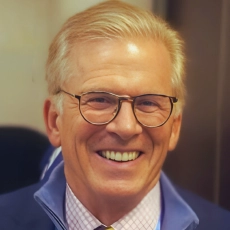
Ren Scott
Guest Host
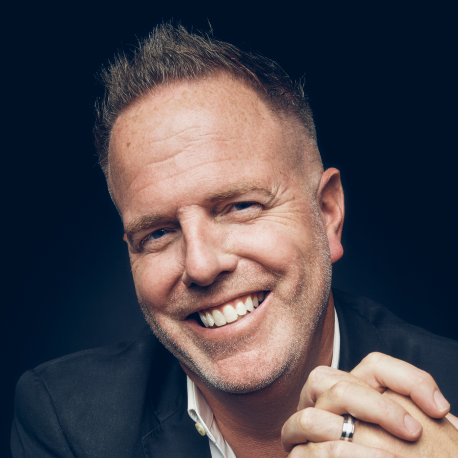
Tim Carroll
CEO Lyric Workplace
Best Selling Author


Episode Sponsor

Synopsis
The numbers aren't in remote work's favor. And Tim Carroll has spent years assembling the proof.
In the launch episode of Harmony at Work, Tim Carroll steps into the guest seat to discuss two simultaneous milestones: the founding of Lyric Workplace, his technology-led, design-driven commercial interiors firm, and the release of his book Work/Place: Reclaiming In-Person Work in a Remote-Obsessed World - already a bestseller on Amazon within weeks of launch.
But this isn't a celebration episode. It's a thesis defense. Tim walks through the data that shaped both the book and the company: face-to-face requests are 31% more effective than email (Harvard Business Review), remote workers are 31% less likely to get promoted (Wall Street Journal), and 69% of Gen Z report feeling lonely and disengaged - and want to return in person (Gallup). He argues that the productivity surge organizations experienced during COVID wasn't a remote work story. It was a fear response. And the moment the world reopened, that advantage collapsed.
Tim also addresses where flexibility does work, why the commute is an asset most people dismiss too quickly, and what the "bump factor" - those spontaneous hallway collisions - actually does for business speed and culture. He closes with the philosophy behind Lyric Workplace: nimble, bespoke by design, and built to deliver a client experience the industry hasn't seen before.
The office isn't separate from business strategy. It is strategy made physical.
Full Transcript
Ren Scott (00:00)
Hello everyone, I'm Ren Scott here with Tim Carroll, and we have a brand new podcast we like to call Harmony at Work. and for the record, Tim is actually the founder of Harmony at Work and normally the host. But today we decided to flip the script a little bit because Tim has two very important announcements, and I just thought it'd be better if Tim didn't have to interview himself. So, Tim, welcome to your podcast. How does it feel to be on the other side?
Tim Carroll (00:25)
It's weird, but but awesome and fun. And I'm just really thankful that you agreed to do this and we have this time to to have a chat. You and I have some great chats all the time and hey, we're gonna record one, so that's good.
Ren Scott (00:38)
Absolutely. and I have to say, I'm really excited to talk about both these things because I think they're going to be game changers for not only for you, but I think for a lot of people in the business community. So let's start. there's two big announcements. First, you're starting a new company, Lyric Workplace, And then we go on to the second big announcement that you're just releasing a book.
called Work/Place Reclaiming In-Person Work in a Remote Obsessed World. And by the way, it's already a bestseller on Amazon.com. I have my copies here. And I gotta tell you, it's a great read. And I think it's going to be a a real game changer for people in the business community. But but let's start with Lyric Workplace. you know this is something you put a lot of thought into.
Tim Carroll (01:08)
Thank you very much.
Ren Scott (01:19)
yes, it is in the line of commercial office furniture and design, but this ain't an old-fashioned office furniture and and design firm. So talk a little bit about it.
Tim Carroll (01:30)
this has been a lifelong journey. really the time in this industry, I've had a front row seat to really watch and learn and be a good student of this mission. You look, I am my mama's slow child, and you ask my siblings, they'll be the first to tell you that. But the truth is I I'm I'm at least a good student and I've been able to watch and see what the best of the best do.
But I've also been able to see what doesn't work. And to be honest, that's been able to craft strategy for the future more than anything for me. And by the way, I've made more than my fair share of mistakes and more than I can count. But I will tell you, I've learned from all of those and I've learned from watching what other dealerships miss, where they miss. And so it's really helped to build this next.
phase of a dealership and and really we want to lean into technology in a big way we are so leaning into AI it's a such a cliche now all of a sudden to say that but we have some really tangible ways that AI is going to affect our efficiency we want to be the most efficient dealership on the planet that's our goal the most efficient dealership on the planet
And I believe we can achieve that pretty well. and we'll continue to get better at that as technology improves. but we want to be high touch, bespoke, on by design, bespoke. We are not looking to be the biggest. I tell you, over the years, the old school way of looking at a furniture dealership is to say, we're so big, we can take advantage of our size.
When in actuality, that creates hurdles, creates challenges, and creates red tape that is really tough to overcome. And it and it increases the timeline to get things done. We want to be nimble, efficient, and we wanna be the dealership of the future. And we believe size does matter, but it's the fact that we're small and we're able to get things done and be.
really unique in our approach with every single client that we do business with and be truly present in those moments. That's what's gonna make us different. And high touch, wonderful experience, that's what we're gonna cater to.
Ren Scott (03:40)
You know, and the other thing I I really want to point out, because I've known you for a long time and watched you work, but you really believe the office space is the foundation of creativity, productivity, the whole thing, communication. And that's why you work so hard to create the perfect fit to match the company you're working with, yes?
Tim Carroll (03:59)
Well, look, let me first say it sounds a little bit like I have a ulterior motive in saying that because I do I am in the in commercial interior space. I want people to be in the office. This is true. However, it's more than my opinion. And the best parts of work do happen when we're together and we are meant and built to be in community.
And so that office is a very, very key part of that. The the seeds of culture are sown in the office in the moments that quite honestly, for years we used to think were the most unproductive time that we ever spent was the time talking about our weekends or the time talking about what what our kids are doing. And truly those are the moments when we are starting to build relationships.
Where statistically people say that the reason they don't leave the companies they're currently working with, it's not money. It's because their friends work there. And those are just invaluable moments as a business leader, as you look at it, in retaining your quality talent.
Ren Scott (05:03)
And that segues nicely into the other big announcement, which is your book, Workplace Reclaiming In-Person Work in a Remote Obsessed World. I'd like you to talk a little bit about how this whole book started because I know for a lot of people, it was the pandemic that really sparked the conversation about should we work in the office, should we work remotely, and can you work effectively remotely?
you've been studying this for years going back to graduate school. So tell me how the whole thing unfolded for you.
Tim Carroll (05:29)
Yeah, well it started because I had to write a thesis in gra graduate school. And so yeah, so I was forced to do that, despite my attempts to not. and at that time, a long time ago, I wrote it on can you build and maintain culture in a virtual world?
Ren Scott (05:33)
Didn't didn't we all?
Tim Carroll (05:47)
Transparently, that was a hundred years ago when there were a lot less technology tools than we have today. I get that. But when I went into that, I went into that believing that you could. And I wanted this to make my point that you could build and maintain culture in a virtual world world. I came out of this thesis understanding you really can't. You could maybe maintain it for a short time, but you definitely can't.
Build it. it's virtually impossible. And so that started a journey. By the way, when I finished that, I swore I would never write again. it's like, forget it. A lot of people take their their thesis and write books. I'm like, I'm not gonna be like them. I'm done. And many years later, COVID hit. And because of my background and because of the industry that I'm in, and
And the research that I was already doing because of this industry and the workplace strategy that I do, I was asked to speak at a lot of events and to speak to a lot of people about this topic. And from that, I had to do more research. I had to put together speeches. And it just organically started to create this place where I looked back.
And said, my gosh, like if I put all this together
I have a book. So it also started to post-COVID. I saw a lot of A and D firms and which is architect and design firms and brokers and a lot of people that should care about the office because it's detrimental to their to their livelihood. They, if that goes away, they're in trouble. Talking about how much they care about work from home. They think it's the greatest.
Ren Scott (07:15)
Right.
Tim Carroll (07:20)
And thought somebody needs to write something that kind of shows people that's not the case. If we don't believe in it, who else will? And so somebody from within needs to write a book that says this is the guidebook to why business leaders should want to have people back in the office, why employees should want to be back in the office, and how we can do it. And it doesn't have to be a full
in person it can be flexible and hybrid and that's one thing we have learned flexibility can work and that some cases work from home does work there in the book we'll we talk about how there's some some places that it does work. I believe that but what I wanted to lay out in this book is that this is a
An important topic, not just for people in our industry, in all industries. And I wanted people to have data, not just opinion, because there's a lot of opinion out there. you know what they say about opinions. So I wanted data, you know. In God we trust, all others must have data.
Ren Scott (08:22)
Yeah, you know, and and I I'm glad you got into that and I want to talk about some of the data. I it the book, for those who will read it, haven't read it, it is so dense and is so nuanced. And I say that in a positive way, when I got into the book, I I was just fascinated by things like mental health and and promotions and all these things that I didn't really think of that are kind of tangential, but they're really at the heart of the matter. And I do think that what's going on right now
this topic about do we go back to the office, do we work remotely, is probably one of the most talked about things in the business community today. And so I think this is really timely, and I think it's it's something that people are gonna really wrap their arms around and learn a lot from the book. I wanted to touch on the point that you just made though, and that is one of the things I really liked about this is it's not just subjective, it's not just the world, according to Tim. You know, you have
a lot of research behind it and a lot of data. And I know there's a few data points that I mentioned to you just kind of rocked my world when I saw them, how kind of clear cut they are. Share some of that data with us if you can.
Tim Carroll (09:23)
Yeah, look, and it's funny because in my research, I was able to really find some things that I've talked about for years. and I and I was able to find supporting evidence to it. I've told salespeople for years, if it matters to you to close the sale, it should matter to you to be face to face when you present that that proposal, right? Because face to face is a whole lot harder to say no to.
Well, Harvard Business Review did a research study on this and it showed that that face to face interactions and requests are thirty one percent more effective than email.
In person matters. Again, if you're remote, everything's virtual, everything's email, all your requests. And look, whether your job title is sales or not, we are all in sales. Everybody is selling an idea, an initiative, a thought all day long. Those are going to be much more effective if you're able to do that face to face than over email. That's a big one, right?
And that just tells me a lot about the importance of being face to face. also Wall Street Journal talked about that remote workers are 31% less likely to get promoted. If your career development matters, out of sight, out of mind is not what you want as an example of your job.
Look, and I believe I want my presence to be necessary. if it's not, then the rest of the world becomes my competition.
we all know people that, especially in IT, this is a big deal in IT, because they do a lot of remote work, but in IT, we all know people that that have interviewed in the past and they were interviewing for against maybe 25, 50 people. Well, now they're interviewing against 500, 5,000 people because it's a work from home job and they're taking
Applicants from everywhere. There's always somebody better, and somebody will do it cheaper. And that's a that's a bad combo if you're opening it up to the to the world and you want a job. So you gotta be thinking about that as an employee about what's more important. And don't even get me started on the mentorship side. I've yet to see anybody give me the silver bullet of how you can mentor someone effectively and consistently.
Ren Scott (11:12)
Right.
Tim Carroll (11:36)
Virtually. And that's that really, even if you don't want to progress your career, just to make sure you're always growing, because if we're not growing, we're just preparing to die. You need mentorship and you need to learn. And a lot of that more is caught than taught. And that's where mentorship comes into place. And we're missing that in the virtual world.
Ren Scott (11:57)
You know, and it it's
funny thinking back on careers and my career and probably yours, the most important things that happened for me happened face to face with somebody who was who took me under their wing and said, Hey, I'm gonna show you the ropes. And we got to develop a relationship, a friendship, where they said, Hey, you know what? You're you're a pretty good guy. I'm I'm gonna invest some time in you and I'm gonna teach you everything I know.
Tim Carroll (12:08)
That's right.
Ren Scott (12:19)
And and that was where you learned everything. You didn't learn anything by reading a guidebook. You learned it in person through relationships and finding somebody who you wanted to hitch your wagon to. And I I I just think it's essential. And again, these are the kind of things that I don't think occur to a lot of people when they think, wow, this is great. I have more flexibility, I can work from home, I can see the kids. But you're missing out so many things. And I just think it's so important these things get get pointed out, especially to the young folks starting out a career right now.
Tim Carroll (12:45)
Optimizing for convenience is not going to help you grow your career.
Ren Scott (12:49)
Right. Right.
Tim Carroll (12:49)
That's it. And and
that's what we've done. And what worked in a global pandemic isn't necessarily what's gonna thrive, make your company thrive. we have to adjust back to some sense of reality. And again, what we learned, we came out of this with a good understanding that we can be flexible. Somebody needs to be home to meet a HVAC technician. Let them work from home during that time. You know, they give you a
eight hour window that they'll be there. So not to upset any HVAC technicians, but you know if that's the case, let them be productive while they're at home. And just to get back to to one other statistic in nature, they came back that s showed that in-person brainstorming had
Fifty to twenty percent more ideas come out of it. When we're online, it starts to become what they call groupthink. People are less likely to offer up new ideas because they just want to go along to get along. And yeah, yeah, yeah, that sounds good. Let's do that. And quickly let's get off the the Teams call so I can go back to watch catching up on my binge watching of, you know, orange is a new black or whatever it is I'm watching. So
Ren Scott (13:37)
Right.
Tim Carroll (13:55)
I think that we have to understand we're missing out on some real, real solid ideation on top of everything else when we are all remote.
Ren Scott (14:05)
let's get into a couple of the specifics. mentorship obviously is a huge one, but let's go to the basic core of any corporation, productivity. Let's talk a little about productivity and how that suffers or doesn't suffer working in a in exclusively a remote venue as opposed to people face to face and working together.
Tim Carroll (14:25)
Yeah, let's go back, if we could, to COVID. Let me remind everyone listening what environment we were in. We were all scared for our jobs. We were all scared for our lives. I mean, I don't know who else was getting completely undressed after going to the grocery store because he thought maybe something got onto your clothes. and so we all, we all a hundred percent true.
Ren Scott (14:45)
I I laugh now, but it was absolutely true. I mean, we were so
paranoid about everything.
Tim Carroll (14:49)
So
paranoid. And so we were really scared. And so we all had our computers at home, and we and we had no options. There were no options to do anything. You could work, you could watch TV, or you could take a walk. You there was no going out and meeting friends and having drinks or going to lunch or whatever. And we were all very productive. Fear can be.
A pretty decent motivator, at least on the short term. So we were all productive. Well, people still claim that time as how productive they were as to why work from home works. Well, the minute all the distractions of the world started coming back and all of the options started opening back up, we became less productive.
it's still again, it's in the book statistically, we are still less productive, even though that people that work from home work more hours statistically, they are less effective at their job. And we have to understand that again, on occasion, I think it works, but once we start getting in there, it there becomes a gray area where we allow a lot of the outside noise to get in the middle of our day.
I love my kids, I love my wife, but I can tell you right now when I'm working from home
It's as if I'm not. I'm requested to do things, especially in the summer. We're in the summertime. as if I'm not working. So productivity is a big issue and we have lived under a productivity lie since COVID that was built around how productive we were during COVID.
Ren Scott (16:19)
And I don't want to get ahead of ourselves, but that kind of ties into this idea that commuting is a bad thing, you know? Or or it's taking too much of my time. Now I understand if you have an hour and a half commute, you know, into the city or something, yeah, that's taking a lot of your time and maybe a hybrid or even a remote position for some people will work. But what you were just talking about, and I know it so well, you walk out of your office
And your children are right there, or your wife's right there, or somebody's asking you to do something, and you just get pulled away. Whereas, and I know you you you talk about this in the book, and I think it's very interesting for a lot of people, a reasonable commute is a time to, you know, calm down, kind of reboot, think through the day, clear your head, and then get home and be a better person when you get home, and be able to focus on that. But this idea of being pulled different directions.
all day, every day when you're trying to do your job is not necessarily a positive thing. I know people love it in some ways, but it's not helping productivity from that point of view.
Tim Carroll (17:21)
Probably the most controversial thing in the whole book that I wrote is the this idea that I actually like my commute. Now, at times I may be upset about it. but the truth is it is a great demarcation point between where I was and where I'm going. I can release the stresses of the day.
As much as possible.
Dig into a podcast like Harmony at Work. Or I can dig. Yes, I do too. I do too. or you can just get it into an audiobook like workplace. But it gives you a chance to disconnect and kind of reset your mind. So when I get home.
Ren Scott (17:46)
Which I highly recommend, by the way. It's a very good project.
Tim Carroll (18:00)
I'm ready to attack and be as present as I possibly can to those that matter most. And so when we're missing that, we're we're out of the frying pan right into the fire. And I don't know if that's the healthiest thing. So call me a glass half full kind of guy, but I I try to look at that commute as, you know, quality time with myself to get my mind right.
Ren Scott (18:23)
and for a lot of people, especially this, you know, this younger generation, they don't know the difference because they've never had the other, right? really feel badly for those who COVID blew them out of the water at college, you know, to not really have that experience. And now they're in the business world and they're not having that full experience either. And I think if you s talk about this commute.
to someone who's 28 years old, they're gonna look at you like you're crazy. But, you know, for those who have experienced it, it really is a chance for you to segue into that other part of your life, which is really, really important.
Tim Carroll (18:58)
If I can speak directly to that group of individuals, I I would say to them, don't waste that windshield time. It albeit in business where you could be driving between meetings if you're in sales and you can make phone calls to other and set up other meetings, for you know, a couple of weeks down the line. Or if it's you're coming home and you want to make sure that you are ready for whatever you have coming up.
Don't waste the windshield time. Take advantage of it. Make it productive for you, from your for your mental health or for your business, but use it and be productive.
Ren Scott (19:32)
Yeah, and let's talk a little bit more about mental health. A lot of time alone, you know, the statistic you have from Gallup, 69% of Gen Z reports feeling lonely and disengaged at work, and say they want to return in person. And by the way, I I can tell you something, I can tell you something personal. I have two children, one working in New York and one working in Charlotte. Both of them moved, my daughter moved from London back to New York because she wants to go back to the office.
Tim Carroll (19:44)
They get it. They get it.
Ren Scott (19:57)
My son moved from New York to Charlotte because the company is there and he wants to go back to the office. And a year later, these two young folks have been transformed. They're different people. They are happier, they like their job more, they're enthusiastic about it. And it it's just night and day from where they were a year ago going, God, I'm on you know, I have to be here all night long on the computer. It's really changed their lives and and they made that decision.
Tim Carroll (20:24)
It's probably changed their careers too, because honestly, those people that are present get promoted more likely because they understand and and look, I I've said this for for a while. The the next issue we're gonna hear about is this idea that people that are remote are not getting promoted as quickly. And hey, I've been with this company longer, but that person is getting promoted. Well
Because they're coming in and they get it. They understand who we are a little bit better than you sitting in your pajama pants at home. You know, I've said it forever, culture requires pants. So we need to get our pants on and we need to come back to the office. But but they're getting face to face time with the leaders of the organization. And that is not going to go unnoticed when it's time for promotions. Now,
Mental health is a real issue. I think we all can agree that mental health was an issue during COVID because we were separated. I still can't g wrap my brain around anybody that believes continued separation is the fix. If we believed that we needed people, then we still need people. So
I you know, the mental health issue is is a big thing. And I will just say to the Gen Zers out there, that 69% is a huge indicator that they just get it. They've lived through it and see this is for the birds. I want to at least in part be around people because people can make they can make me better at what I do. Iron sharpens iron, right? And it's hard to have any iron.
anywhere close to each other if you're separated by a screen. And so I applaud all of those that are are chomping at the bit to get back to the office. Push, push, push, get back there. your mental health and your career will both improve.
Ren Scott (22:10)
And you touch on it several times in the book that sometimes it's those spontaneous encounters that are the most prolific and the most productive. Things you didn't expect. You know, somebody's right there and you can just say, hey, what about this? And they go, you know what I was thinking, and you have a dialogue. You don't often have a dialogue over a screen.
Tim Carroll (22:28)
Speed of business improves completely when you're in the same location. You can have that quick. So many times I I've been in an office and I've been able to just pop into somebody's office, pop my head and go, hey, thinking about this, what do you think? Yeah, that'd be great. Done. Approved. Let's move. And also those moments, what what I would call the bump factor, where you just happen to bump into someone in the cafe or whatever and and you
Happen to mention the how how's that initiative going? How's that new thing you're working on? You explain it, yeah. Well, I've had this this issue. Well, hey, have you tried this? my gosh, that would be great. And just in in a matter of seconds or minutes, the whole thing changes, all because you just happen to run into each other. and so I I just think there's so many positives that happen in the office.
seen and unseen that make it so important for us to be together.
Ren Scott (23:20)
Yeah, serendipity's a a wonderful thing, right?
Tim Carroll (23:23)
It is.
It most certainly is. I'm telling you this it has proven time and time again, just anecdotally, that projects have improved, clients have been better served, all of that because people were in the offices together. Now, sometimes they're in different offices in different parts of the country, and you have to do that. But if they're in the same city
The majority of the time they've they've gotta be together, right? It just it makes a big difference.
Ren Scott (24:49)
we've talked a lot about the benefits of being in the office, but you make it very clear there are some situations where a hybrid model, or even for some, a remote model works. Let's talk a little bit about those situations and how it fits.
Tim Carroll (24:58)
Course.
Yeah, I mean remote can work if you're a small entity that has been together for a long time and you have a an agreed upon kind of shorthand, it will work. I had a brother who was with a design firm for many years and they went completely remote, got rid of right during or after COVID, got rid of their their office. There were only four people, three of which were family, and him.
And they all got knew each other and knew the shorthand. A lot of it was heads-down work. Well, that that can work. That a hundred percent can work. Certain job functions where it's just a singular heads-down production type work, call centers. They went remote. I think that it probably works. Although I will tell you a lot of call centers are starting to come back to companies like ours and say, hey, we want to bring people back because there's an energy when we're all together.
And people stay motivated and they they stay positive when we're together, when they're separated, people tend to burn out, burn out a lot quicker. So they're even coming back, but I could see why they went remote in the first place. Those things can work. Hybrid, I'm telling you, or I will lump in their flexibility is here to stay. We know it can work. We all hear these people work from anywhere. Yeah, that can that can work.
But it can't be the substitute for what happens when we're together. We are emotional beings that want to be connected, that long to be connected. Even the most recluse person, there's a there's a connection desire deep-seated in there. And so the biggest thing that that we could do wrong as business leaders and business owners is demand people to come back and then have them.
Do things that they could have done at home. You're coming back, but I get it, you spend all day long on Teams calls in your office. So you drive all the way here, you get on Teams calls all day in your office, and then you power down and you get back in your car and you drive home. That would upset anybody. Of course, that can be done at home. You've got to create spaces that want that make people want to come in and collaborate. It needs to be the office needs to be the social and collaborative hub of the office that.
builds and maintains the culture. Because culture is is created and maintained by employees. It's the personality of an organization. And I'm not certain how it any personality of an organization can be created or maintained when you're talking through a screen.
Ren Scott (27:23)
Yeah. Maintained maintained you yeah. This is very very enlightening. no, but it you said in some situations it can be maintained to a degree. It just can't be created, correct?
Tim Carroll (27:23)
As we are.
The main the maintenance of it is really hard though. I remember during COVID and what I had leaders doing, the amount of touch points we had to do because we wanted to make sure people didn't feel alone and out on an island by themselves. And there were people that that they were sheltering in place alone. And so you don't want to leave people out there by themselves. And so the biggest thing I've I've always heard from people that are remote employees for a
more centrally located entity, they always say, well, I feel like an island unto myself. So I've always tried to change that by bringing people into the office once a quarter or more so they can feel the culture and get re-engaged with everybody. And every single time those individuals would come in, they would thank me. This is awesome. Thank you for for bringing me in. They all
Enjoyed it because it it gave them a chance to interact. And sure, they were interacting over over Teams and Zoom, but it's not the same. And we we did all kinds of stuff to try to grow culture and virtual happy hours and all of that stuff that everybody was doing. It was exhausting because you put you're always on. When you're on a on a Teams call or a Zoom call, you're on. And so that gets
Ren Scott (28:46)
I remember you
scheduling all those things to try to keep that core together, you know, during the pandemic and past.
Tim Carroll (28:52)
And you're
I'm way more exhausted at the end of the day because you are just that screen is on, you're just a face, and it's right up close, and you've got to be engaged and on. And it's exhausting. So it's it's like doing eight shows a week in New York in in my like my past. That was exhausting, right? And you feel the same way being on all the time in in on on Teams or Zoom. So you can do it, but it is.
Harder work, especially on your leaders, to make sure you're connected to people and they're getting what they want and they get the same as much of the same vibe of, hey, I can ask a question that I need right now instead of, now I need to set up a meeting. I've got to schedule it and work it in. And it's, you know, all of that goes away when you're in the office and you can just pop in and ask a question.
Ren Scott (29:40)
So so what's the future, Tim? I mean what what's the what are you seeing trending now? You know, you read these headlines at certain corporations saying I want everybody back in the office and you see the big headlines, but I don't have a real sense of how widespread that is. you know, where the scale is right now, are are is there a growing trend to get people back in the office? or is it still you know, seventy thirty kind of thing?
Tim Carroll (30:04)
I am seeing the pendulum swinging faster and faster. It's starting to speed up. Now, I honestly I don't think it's ever gonna go back to to where it was, but I do see it's speeding up more.
Right of center, so to speak, where I think the majority of people are going to be back in the office the most of the time. It really does need to be, it doesn't, the office doesn't need to be the icing on the cake, it needs to be the cake. The remote work needs to be the icing. and I I see that happening more and more. Despite that, since writing the book, I've even heard more and more people say, Hey, my client or my company is still struggling with this.
And you know, I just had a a very large hospitality company in Orlando, Florida, just bought a ton of books, bought cases of books to give to their executives to make sure that they are all reading because they have this big initiative to make sure that they're understanding the reasons and and the the why behind the why of the return to work. And I so I think that's really gonna happen.
Now, from my industry perspective, I think this is important to say as well, since we're talking about Lyric Workplace and Workplace the Book, efficiency is going to be more of a premium. How fast can you move? When you're so large, and we've had a lot of consolidation in our industry, when you're so large, it becomes virtually impossible to be nimble. And so
I believe it has an opportunity for firms like myself and my company to be able to be very nimble, very fast, very responsive, and very high touch. And I think that experience that people are going to receive in the future, in the very near future, it's what they're going to be craving because that's what matters. I mean, obviously, things can go wrong in our industry. The miracle is that.
when when any project goes off without a hitch. How are you gonna respond? How quickly can you respond? Or are you so bogged down by by the red tape because you have to be, because you're such a large organization, that's the only way. And I support that because large organizations need that.
Or are you gonna go with someone that can get your stuff done quickly and make it feel like a unique experience? And that's what we're here to provide. And and everybody that's part of Lyric Workplace is committed to that mission to be bespoke by design.
Ren Scott (32:17)
So, you know, we're talking about this, but it but it doesn't stop there. you've got the book.
But you're also out there, Tim, always talking about leadership, always talking about getting back to the office, always talking about these concepts that I think are so crucial in the business world right now and just really at the heart of so many discussions. If people just want to follow you and stay in touch with this, what's the best way to do that?
Tim Carroll (32:38)
Well, of course, LinkedIn, I and I can't believe I'm about to say this is I'm heavily it on TikTok. I never thought I would be a TikToker, Ren, but apparently I am. there's no hiding it now, but I do engage a lot on that. videos every day, talking about this very topic, about why the office matters, why leadership is important, and why you should care about it. and so
By all means the Tim Carroll at the Tim Carroll on TikTok. and there's a lot of content and more coming.
Ren Scott (33:10)
And because of the the Gen Z's and the demographic, TikTok is a very appropriate place to be. I mean you gotta go where your audience is, correct?
Tim Carroll (33:17)
absolutely right. Like I said, I went into it very half-heartedly, but it's been a really great way to interact with people and by all means they're the people that are on there are not necessarily the same that are on LinkedIn. So it's good to interact with both both audiences on this topic. it's a little bit more
lively of a debate on TikTok than it is on LinkedIn. I will tell you that much. Yes.
Ren Scott (33:41)
Two different worlds, man. But
listen, this has been a great discussion. I wanna wish you all the best with Lyric Workplace. I know you'll do tremendously well. you always do. And I I cannot recommend this book more to people.
you can get it on Amazon.com. As I said, it's already a bestseller and it's only been out for a couple weeks. but I I think when people lean into this, it's a good read. it's and nuanced read. I mean that's the I keep telling you that, but I expected this thing to be black and white and go, you can't do this and you can do this. And what you did is you got into a lot of nuanced areas that I think a lot of people just don't think about. And and I think this is really gonna help open a lot of eyes.
Tim Carroll (34:20)
Well well thank you. I will say it's not just Amazon, it's Books a Million, it's Barnes and Noble, it's anywhere that pretty much that you can order your books, you can you can find it. it a lot of a lot of hard work went into it. A lot of years and years and years of research has gone into it. And the last thing I'll say is, hey, you know, it's been busy time for me and my household for sure with the new company and the new book, but honestly.
you're now going to be officially part of this family of something new, and that is Harmony at Work. this podcast, this is the first one. So we're we're launching that first one. and and this is really a great evolution of what we've done in the podcast space in in the past. And I'm really ready to take this dialogue and this conversation to a new level with Harmony at Work. So thank you for being the original and forever the first host.
Of harmony at work.
Ren Scott (35:11)
I'll put it on my resume. But listen, best of luck. And for those listening, watching, next time around, Tim will be the host, so the performance will be markedly better. I enjoyed it so much. thanks for being with us and we'll see you on the next podcast. Harmony at work. Thanks, Tim.
Tim Carroll (35:13)
Yeah.
Thanks, Ren