
September 16, 2026
Season 1 Episode 2
What a Former Disney Imagineer Knows About Building Culture That Sticks
Theron Skees led creative at Walt Disney Imagineering, including a $5 billion portfolio of three ships and an entire island. He says the sparks between creative and technical teams are not a problem to manage. They are the engine. He joins Tim Carroll to explain positive tension, and why a memorized values card has never built a culture.
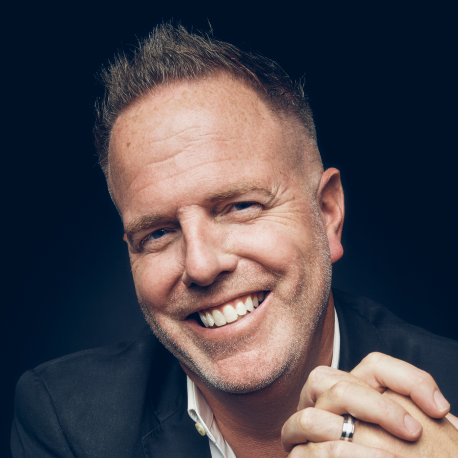
Tim Carroll
CEO Lyric Workplace
Best Selling Author

Theron Skees
Founder
The Designer's Creative Studio


Episode Sponsors


Synopsis
Theron Skees spent years leading creative teams at Walt Disney Imagineering, where hundreds of people, competing motivations, and billion-dollar stakes collide on a single project for years at a stretch. Most organizations would call that friction a management problem. Theron calls it positive tension, and he says it is where the best work actually comes from.
In conversation with Tim Carroll, Theron unpacks how leaders harness that tension instead of smoothing it over. From there the episode turns to story: why mission and vision statements die on the wall, how a one-sentence brand story can be lived rather than memorized, and how leaders translate that story into daily human habits their teams actually repeat. It closes on a harder truth for anyone who designs space for a living. A beautiful room that fatigues the person working in it is not a success. It is a failure, and it reflects on the brand, not the designer.
Theron is a former senior creative executive at The Walt Disney Company, where his final project was a $5 billion portfolio of three ships and a private island for Disney Cruise Line. He is the author of Creating Memorable Worlds and practices what he calls narrative experience design.
Culture is not a card in your wallet. It is a habit, or it is nothing.
More from Theron Skees: his book Creating Memorable Worlds, with a foreword by Joseph Pine, and his podcast League of Extraordinary Storytellers, available at leagueofextraordinarystorytellers.org and on Apple, Amazon Music, Spotify, and YouTube.
Full Transcript
Theron Skees (00:00): Leading creatives is one of the toughest jobs I've ever had in my life. When those creatives find that they have true meaning, they're really moving the needle, their ideas count. You can't stop those people. The momentum that comes from there is nuclear. It's atomic. And that passion spreads to others like a wildfire.
Tim Carroll (00:20): Welcome to Harmony at Work, the podcast where culture, creativity, and the workplace come together. Today, I'm joined by Theron Skees, former senior creative executive at the Walt Disney Company, for a conversation about leadership, storytelling, and what it really takes to create meaningful experiences at work. This is our first guest of the new and improved podcast in our first season. Let's get after it.
Tim Carroll (00:46): Theron, thank you so much for joining us today. I am so excited about this. First of all, not only is this episode one of the season, you're the first official guest for the season, but you're also the first official guest for this new and improved podcast that we are calling Harmony at Work. So thank you so much for being on.
Theron Skees (01:08): It's my pleasure. I hope I can live up to all of that hype. That's an important place to be. So thanks for the invitation. It's a pleasure to be here.
Tim Carroll (01:17): I have a sneaking suspicion that you will, and that the listeners are in for a great, great time here. We have a connection in that you worked for Disney for many years, and I have worked with Disney on the furnishing side, the furniture side, for many, many years. As I tell a lot of people, we really do focus on the client experience, and we want to make sure that Lyric Workplace delivers that every day. And Disney clearly does, right? I'm proud of the work that I've done with them. But you've spent years shaping creative experiences inside one of the world's most recognizable brands. What does a truly harmonious workplace look and feel like behind the scenes of that organization?
Theron Skees (02:07): That's a great question. Let me first say that I really do believe that the best work comes from a harmonious work balance on a team, in an organization, in a company. When you work at a place like Walt Disney Imagineering, you're faced with this element that I've labeled positive tension.
It's because you've got non-creative and creative, technical and non-technical teams, hundreds of people on a project, and the project's value is in the hundreds of millions or sometimes even billions, and you're kind of slammed together on this team for multiple years. What happens inadvertently is there's sparks that are going to fly. The reason I like the concept of positive tension, and frankly, that's how I like to lead teams, is that you get the very best results when that tension exists, if it's kept positive, if it's an energy and a momentum that is harnessed to move the team forward. You get things like innovation. You get things like true meaning, a feeling of meaning in your work.
I think that's when, at least for me personally, things are the most harmonious at work: when you're in a flow state where what you're creating, the solutions that you're developing, the stories that you're telling really meet the objectives of the client. All my work is client-based. And it is going to connect with one of the client's customers in a unique and emotional way. That to me is this harmonious state.
Tim Carroll (04:41): You bring up something interesting, and that is the creative class and the non-creative class. In our industry, in the commercial interiors industry, we have that same, let's call it positive tension. We have that same dynamic between those two worlds. So how do you manage that tension? Because they both have very different motivations.
Theron Skees (05:05): That's right. I have a whole section in my book, not a hard sell, but where I really go through that.
Tim Carroll (05:10): But this is the place to do it.
Theron Skees (05:13): What I have found is that the lessons of leadership that you learn as a creative leader in a company like Imagineering, working for a brand like Disney, there's an enormous amount of pressure. My last project with Disney was a five billion dollar portfolio. We had to produce three ships and master plan and design an entire island for Disney Cruise Line. That's high pressure, lots of tension between the team, because you've got engineering, you've got storytellers, you've got painters, you've got programmers and architects and engineers. And most environments in the commercial world where design is required, you have that kind of challenge.
In many organizations and companies, you have that challenge because you've got a technical group and a non-technical group. Most organizations in the world are commercial by nature. There are, of course, NGOs that struggle with this, but I've been mostly focused on the commercial world, because you've got to make money. And there's not a CFO on the planet that wouldn't want a customer to be so connected and engaged with their brand that they come back multiple times. That's what Disney taught me.
I take that same kind of mindset to clients in the world right now. It doesn't matter if your product is yogurt, electronics, or home appliances. There's not a company on earth that wouldn't want a customer to revisit over and over simply because they love the brand. They love why they do things. They love how they do things. And that's something that I learned that's different: in the world that I'm from, themed experience design, one criterion exists that doesn't exist in any other design firm or design practice, and that is making an emotional connection with the customer. So when the whole team is focused on that goal, even though you've got friction, you're focused on a central goal, a central delivery point. Leaders need to establish trust first, and they need to build an environment where that kind of positivity is possible.
Tim Carroll (07:15): You mentioned this emotional connection with the client, and I agree with that. The best way to do that is through storytelling. I believe in business, and anywhere, storytelling's key. People don't remember what you say. They remember how you made them feel. Disney's known for intentional storytelling. How can leaders use storytelling inside their organizations to create stronger culture, deeper alignment, and more importantly, a clearer sense of purpose?
Theron Skees (07:44): It's a really great question. I'm a story evangelist. I really think that it's an important element.
I think the first step would be to really help clarify what story means. In a sense, it's a little bit like the word immersive. You throw a projector in a museum and you project a painting on a wall, and some people might call that immersive. Other people, especially in the industry, with a lot of experience, wouldn't call that immersive.
Story can be the same kind of thing. Story has a bad reputation, at least in our world, of being the last thing that you apply to something that you've designed and built. So in a sense, it's kind of painted on. That's not where story is at its superpower. Story is at its superpower when it's in the DNA of the organization and it seeps through every single pore.
You mentioned the word culture. I have a similar feeling about culture in an organization. If you and I owned a company and we had a bunch of leaders and employees, most likely all of those people would define culture slightly differently. I really like James Clear, Atomic Habits. What I really like about that is when I work with a client to establish what we would call a culture, I do so through establishing human habits that are derived out of their brand story.
I know we're going deep into my practice, which is called narrative experience design, but I don't believe in the MBA practice of mission, vision, practice, and standards. It's great, you can do that, but nobody's going to memorize that, and nobody's going to be able to repeat their mission and vision in an elevator. But a brand story that's one or two sentences that fully embodies the DNA of the organization, you can represent that really quickly. Look at Disney, right? They create magical memories that last a lifetime, or any derivation of that. That summarizes the entire brand experience.
Maybe to drive home your question: leaders should build the culture of their organization around a series of human habits that they establish, derived from the key why of their brand. Simon Sinek, Start With Why. It's the core meaning. It's why did they start the company? That's what you build your brand story out of. If you build human habits of your teams to function based on that DNA, that story, you can't go wrong, because your employees and everybody internal to your company will be fully embodying and representing your brand DNA, just like all of your services and products and digital, physical, and human representation of your brand to the outside world, to the customers. Ultimately that's what you want, a balance between those two things.
Tim Carroll (10:41): Big fan of Start With Why, Simon Sinek, truly inspired organizations. And Disney is one of those. I've preached that for years. I've done why workshops with organizations for years, because I just think that it's so important. You touched on weaving a story into the DNA of an organization, and I'm totally on the same page. I do believe that you need to do that. How do you suggest a leader go about weaving that into the DNA of the story of their company?
Theron Skees (11:15): It's a good question, because it can be a challenge when you're in middle leadership. You've got upper leadership, a C-suite of executives, and sometimes it can be really difficult to move the needle at an enterprise level. So let's take that middle leader, that VP level, maybe director level, maybe EVP level. In there somewhere, not C-suite.
At that leadership level you can still do a lot, because the thing about the C-suite is you can't deny success. If it's objective, if it's documented, you can't deny it. So as an individual leader of a team, it doesn't matter where you are in the organization or what discipline you represent, what function you represent. Look at your own brand of the company that you work within, and do some exercises about extracting the core why.
I'll throw out some ideas. Maybe it's a brand that was founded by an individual or a small group of people. Maybe it's a family brand. What does the brand stand for? Is it lovingly homemade? Is it handcrafted? Is it efficient? Is it safe? Maybe some of that material already exists, but it's boiling down your brand to the simplest, most meaningful way, and it becomes a statement or maybe a couple of sentences. Then I would just begin using that with your team and begin adopting it, talking about it in certain ways.
Think about how that could inform or improve the processes that you currently use. It's basically evoking and representing the essence of your brand at a team level. That means talking to stakeholders about it in that way, using that language in that way. My guess is that you'll begin to move some ears within the organization, because you're doing it in a way that it's not something dusty that was created once and put on a shelf. It's not something that the lawyers in HR send you updates on that you've got to do. It is a living, breathing, real thing that affects the way humans work. And if that's done in a way that's positive and exceptional, people can't help but take notice.
Tim Carroll (13:41): A couple of things. I've worked for big, large companies where I was middle management, and you had to carry the values cards and you better know them and memorize them. If an executive comes to you and comes into town, you better be able to say them. I just don't think that that works. I'm not a huge fan of that.
For us at Lyric, we have a whole brand narrative document that we give new employees that really talks through our story. And then we spend the first day really in that dialogue about who are we, and why do we do what we do, and why should someone care?
Theron Skees (14:19): Why should someone care? Nobody's going to care about a card that you have to memorize, like in school, right?
Tim Carroll (14:24): That's right. You said something that made me think. I just went back to those middle management days and thinking about what we did, and this was way before Start With Why. When I was there, of course, as a middle manager, I think you need to know the corporate story. You just need to understand it, however you can get there. But I would have my own team story as well.
How are we different? What are we about? And what's our brand identity within this organization? I was leading sales teams mostly in my career. So what are we going to be about when we're out in the field that makes us different, us versus everybody else? It feels like that's kind of what you're talking about, right?
Theron Skees (15:11): Totally. Having that identity, it's not a silo exercise. It's not a "we're better than everybody else" kind of exercise. It's how do I empower my team, my people, so that they can live this idea of the brand, so that they can passionately connect with the idea of the brand, the essence at a core level, not something that somebody's beating you over the head to remember. But how do I represent it?
What becomes pretty fascinating at that stage is when you get a team of people that are moving in that direction. Again, I'm used to it on the Disney side. And I have my own company now. Of course, I do this all over the world with different cultures and different types of projects and different segments of the global economy. But it's all similar in that you're dealing with human beings on a team.
It turns out that humans, when they work in a way that has meaning, personal meaning to them, where they feel like they're supporting their fellow workers and their fellow workers are supporting them, they're on a team that's integrated and they're moving with one voice, moving in one way. It's very powerful. And they see the results of that. That is like a flywheel. That's a self-perpetuating machine. What's great about that is that the organization can't help but take notice of something like that. And happy people who work in a place actually create really great service and really great products. At least that's what I've found.
Tim Carroll (16:39): Totally agree. I'd be remiss if I didn't mention you do have a podcast, speaking of storytelling, called The League of Extraordinary Storytellers. Tell the listeners a little bit about that podcast and where they can find it.
Theron Skees (16:51): Absolutely. The League of Extraordinary Storytellers was an idea that I had to demonstrate to people what it's like for different individuals in a commercial organization to speak with each other. How do you communicate? How would I, as a creative person, work with somebody who's very technical? How would I work with somebody who's an educator? How do you have these conversations? How do you do different things?
It's all focused on the experience design industry, but the lessons and the principles that come out of it really apply, I think, to anybody in a role where they're working with others, where they've got responsibilities. So I just encourage everybody to take a listen. You can find it at the website, leagueofextraordinarystorytellers.org. You can find it on my new YouTube channel, Apple, Amazon Music, Spotify. It's all there for you. It's video, or you can listen to it, either way.
Tim Carroll (17:50): What I would say is that there's a great book out there, and it's been out for a long time, called The Experience Economy. It says that if you're in a commoditized business, or in a business in the process of being commoditized, the only thing you have to lean on and pour into is your experience, the experience the client gets with you. I'll take that one step further. That's great to say, but have you defined your experience, the experience journey that the client has? It sounds like you can get a lot of that great help by listening to The League of Extraordinary Storytellers.
Theron Skees (18:27): Absolutely. That would be one resource. Joseph Pine and James Gilmore wrote The Experience Economy in the nineties, and I'm a huge fan. Very informative of my practice. Actually, Joe wrote the foreword to my book, Creating Memorable Worlds, because it is all about creating experiences.
This is kind of what I was talking about in the beginning, where I referenced the CFO wanting to have customers that return over and over again. That's just a metric that's measurable. It's a KPI that makes sense. The only way that that happens is when an experience designer, somebody like myself or somebody like yourself, looks at their brand and creates an experience in one of three of that brand's touch points.
There are digital touch points: ads, Google, socials. There are physical touch points, in stores and locations, where you might buy a product and you get it. And then there's a human touch point, where you can talk to somebody on the phone in a call center, or you might meet an employee or frontline brand ambassador. When you create a range of experiences for a brand that are consistent across those three touch point categories, and they are experiences that evoke the brand, that are designed to make an emotional connection with customers, those customers come back, because they're no longer observers of that experience. They are participants. They are co-creators in that experience. And that's a very powerful change of mindset for any commercial organization.
Tim Carroll (20:04): A lot of our listeners, not all, we have listeners from all different kinds of industries, but a lot of them are coming from the commercial interiors industry. We struggle with the intersection of imagination and execution, and you live in that world. So where do organizations most often lose that balance between creativity and operations, and what can help restore it?
Theron Skees (20:26): Another really great question. I can't tell you how many stories I have of a team working at Disney, working with the Disney client that we might be working with, for years. Four years. You design something, you build it, it's informed by the operations, they've guided you and given you that information, and you've put all of that work into it. And then what you find when you come back maybe years later is that it's not being operated in the way that you initially agreed that it would be, and it's not working at its peak. So there are challenges in how to make that work.
Interiors is a really interesting world. When I went from theme parks, you're designing in the open air, it's blue sky, you're moving these buildings around, you've got hundreds of acres. There's an exterior component, an interior component, and it's many different types of experiences all woven together. When I moved from that to ship design, there are some exterior elements, of course, but it's pretty much all interior. How do you take a brand as well known as Disney and compress that into a cruise ship experience? That was quite a journey to make that leap for me personally. It also happened to be at a time when the cruise line was over 20 years old. They'd already made all of the big impacts in the industry, and their pressure on us was: we have to innovate again.
So I would say that the perfect balance for anyone in the design category is to think about what you're going to produce, an interior, a piece of furniture, an experience. You're almost always doing that for a client. And when you do it for a client, there's a commercial justification for doing that. The client's investing. Your design, your solutions have to solve the problem for the client so that the client can make money. That's just the long and the short of it.
A lot of students coming out of university that are in design fields may have that understanding. The students that I deal with who are going into the world of themed entertainment don't necessarily think that way. They're thinking, I can't wait to create the newest Star Wars, the newest Marvel, the newest thing. And it's an important tap on the shoulder that says everything you create has to work commercially for the client. It's not a downer. It's just a criterion. So the better you understand what that criterion is, what the client needs out of the product or the space that you're creating, the more innovative you can be at evoking the story of their brand in that space.
And that's everything from the functionality of furniture, to the height of the counter that you're serving over, to is it 2750 Kelvin lighting or is it 3000 Kelvin? There are so many elements that create an experience. My challenge to those in the design world always is: ensure that you're informing every aspect, every layer of that experience for the client, so that nothing is left up to chance.
Tim Carroll (24:35): I'm interested in your take on this. In my experience, and I work a lot with designers, a lot of young designers, I have found in my career that the young designers come out of school thinking that the job is all about their creativity and feeding that creative muscle.
What I feel they don't have, and maybe I find this to be a deficit from design school, but maybe it's not, and maybe I just have been around the wrong people, I don't know. The business side is missing. That idea that this is about the client. If it can do both, great. If it can feed your creative soul and it satisfies the client, great. But first and foremost, speed, accuracy, all those things have to be there. Sometimes we've got to get it done and just get it done. Not all jobs are going to be blue sky, wonderful jobs. What is your take on that? Am I alone in what I've seen, or is that something that you've seen as well?
Theron Skees (25:31): That's been my experience as well. Maybe I'll repackage what you said and state it slightly differently. I don't know about better.
Tim Carroll (25:39): Better, I'm sure.
Theron Skees (25:41): Just a different perspective, but it embodies what you're saying. I've seen a lot of students that are much more focused on the aesthetic of the thing that they're designing. So if it's Indiana Jones, in my world, it's a world, it's a cave, it's a tomb, it's exploring. And they're not so concerned with the ergonomic design of the cast member that's sitting there loading the vehicles.
This is what I preach. Yes, create the beautiful environment. You've got to. It has to evoke the place. It has to trigger emotions in a visitor, a guest, again in my world. You have to do that. But if that cast member that's standing there loading the vehicle, opening the doors, whatever their role is, if they're fatigued after being at their post for an hour, they're not going to have the right attitude. And they can actually take away from the overall experience, simply because, as a designer, you didn't create the right reach envelope. You didn't create a music track that had a very, very long loop. If you're in Small World, believe me, you're going to go stark raving mad at a 30-minute loop of Small World. It'll just drive you mad.
So there's so much in ergonomic design. As furniture designers, you understand this. How many times have you walked into a space, a cool hotel, an incredible restaurant, and everything aesthetically looks amazing? You're evaluating materiality, form, lighting, all of these different things. And then you walk up to a chair and you sit down and you're like, right? It looks great, but it wasn't designed for humans. It was just designed to be looked at. It was designed to be a photograph in Architectural Digest so that your firm could be promoted.
And I'm going to be harsh for a second: I would consider that a complete failure. If you're designing something for a human being, when that human being sits in it, it doesn't reflect on you. It reflects on the brand that you designed it for. If you walk into the hotel lobby of a Six Senses hotel, they're going to pay a thousand dollars or more for a seat, a single chair, a single settee. And when you sit on that settee, it should envelop you in the brand. It shouldn't be your thumbprint that you designed it.
I see that a lot with design students, either architecture or industrial engineering. They're thinking in their minds, I'm the next Renzo Piano, I'm the next I. M. Pei or Zaha Hadid. I'm going to be that individual. And what they don't realize is that there's a fraction of a percent of people who graduate that ever get to do that.
So I know I'm blabbing, but I'm extremely passionate that you should serve your client. If you do a really great job for your client, that's in lighting and texture and comfort, and you work really hard for the brand's frontline employees so that everything that they do is ergonomically acceptable, their reach envelope to the printer, to the scanner, to the pens, to everything they do in their job, if you think of them as the first end user, what you do for that client is going to be so different than what anybody else does for them, you're going to have all the work that you're ever going to need.
Tim Carroll (29:09): That's awesome. I love every bit of that. And as I suspected, more eloquent than I put it, for sure. Look, I could talk to you for a long time. I could keep coming up with questions for sure. But we always try to keep this thing down to somebody being on a treadmill, so they can listen to it and then get off. Before we wrap: what is one belief about work, leadership, or creativity that you think more people need to rethink?
Theron Skees (29:39): I read a book by an author named Daniel Pink. I don't know if you ever read it. It's Drive: The Surprising Truth About What Motivates Us.
Tim Carroll (29:48): Love him.
Theron Skees (29:49): That totally changed my approach to leadership and to being an employee. The basic synopsis of the book is that most people think that an incentive or a motivation at work comes in the form of money. And it does, up until a certain point. If you can pay your bills and you can eat on what you make, then money actually no longer becomes a true motivator. What becomes a true motivator is, as an employee, your feeling of meaning in what you do. Does what you do give you meaning?
What has been found in his book, and what I've found personally, is I find that to be incredibly true, especially for those in the creative field, simply because they're more emotionally based. Leading creatives is one of the toughest jobs I've ever had in my life. And when those creatives find that they have true meaning, they're really moving the needle, their ideas count, their thoughts are changing industries and changing experiences. You can't stop those people. The momentum that comes from there is nuclear. It's atomic. And that passion spreads to others like a wildfire.
So, as a leader that I'm talking to right now, if you can ensure that one, two, three, five members of your team really understand what they're doing and the meaning, the impact, the positive impact that they're having in their workplace, these are people that you won't be able to slow down, especially if you empower them with the ability to do that for others. Now you've got an entire team and a whole organization that has a momentum that is intrinsic. It's a part of them at their DNA. That to me is harmony at work. That is how things should be in our world. And it just takes people who are conscientious about it and are intentional to making that happen.
Tim Carroll (31:47): Purpose-driven workplace. It's a thing. Gen Z is all about it. They will choose that over more money all the time. So if you're not thinking about the purpose in what people do, you need to start thinking about it, so you can attract and retain the quality talent that you want in your organization.
Theron, thank you. Such a joy. What a way to kick off the season. It's been great. I sense that we will probably invite you back sometime in the future and continue this conversation. Thank you so much.
Theron Skees (32:22): A real pleasure. I really appreciate you having me, Tim. Thanks.